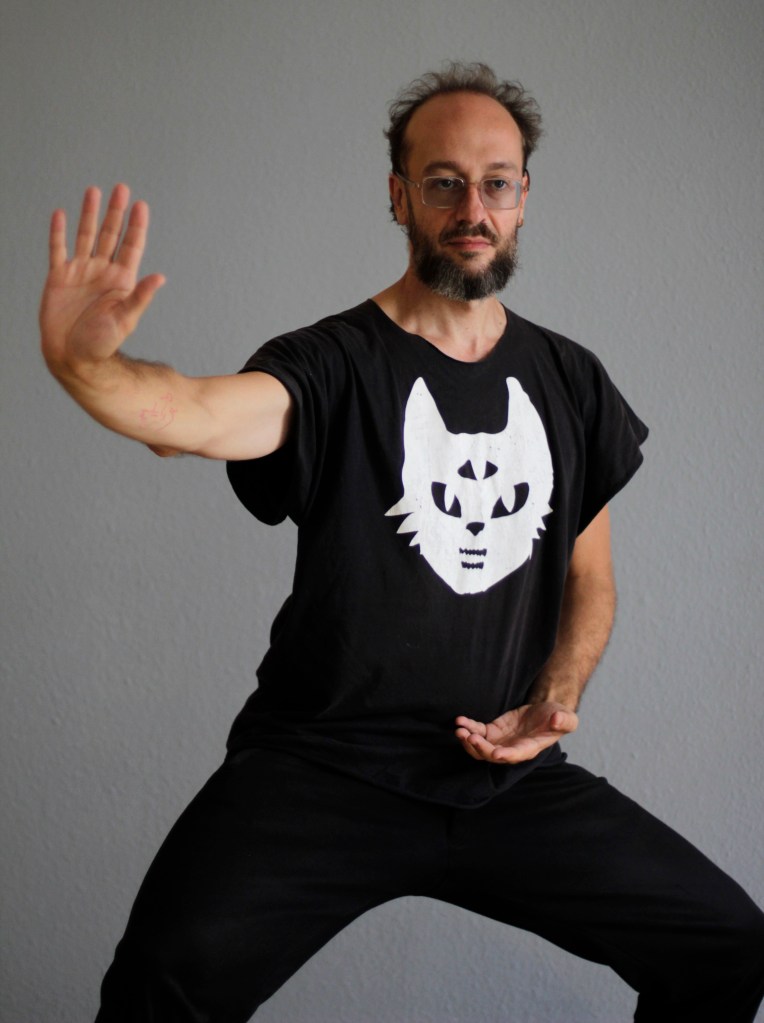
Tai Chi, also known as Taijiquan, is a traditional Chinese martial art characterized by slow, flowing movements that integrate physical exercise, meditation, and breath control. Rooted in ancient Chinese philosophy, particularly the principles of Yin and Yang, Tai Chi promotes balance, flexibility, and internal energy (qi) cultivation. Practitioners perform a series of postures or forms in a continuous, circular motion, often described as moving meditation. This practice not only enhances physical strength and coordination but also reduces stress, improves mental clarity, and fosters overall well-being. Tai Chi is widely recognized for its health benefits, including improved cardiovascular health, better posture, and increased relaxation.
from November the group classes will take place in 4 different studios:
Tuesdays 8:30am-9:30am at ZBK (Zentrum für Bewegung und Kommunikation) Weichselstr. 34.
Wednesdays 17:00-18:15 and Thursdays at 16:45 – 18:00 at Initiative der heilenden künste, Bethanien Südflügel, Mariannenplatz 2a
Fridays 9am-10am at Heilehaus, Waldemarstr 36, 10999.
( also private classes one to one). Contact me for details: diegonante@gmail.com
Diego starts by understanding each person’s needs and how they live their daily life. Based on this, he creates customized Taiji and Qigong routines that fit perfectly with each individual’s schedule and lifestyle. But Diego does more than just teach the movements; he also helps people figure out how to make time and find space for their practice every day. This approach helps make the practice a regular part of their life, bringing out its full benefits for health and well-being. Diego’s method ensures that Tai Chi isn’t just an activity but becomes a vital and enjoyable part of their daily routine.
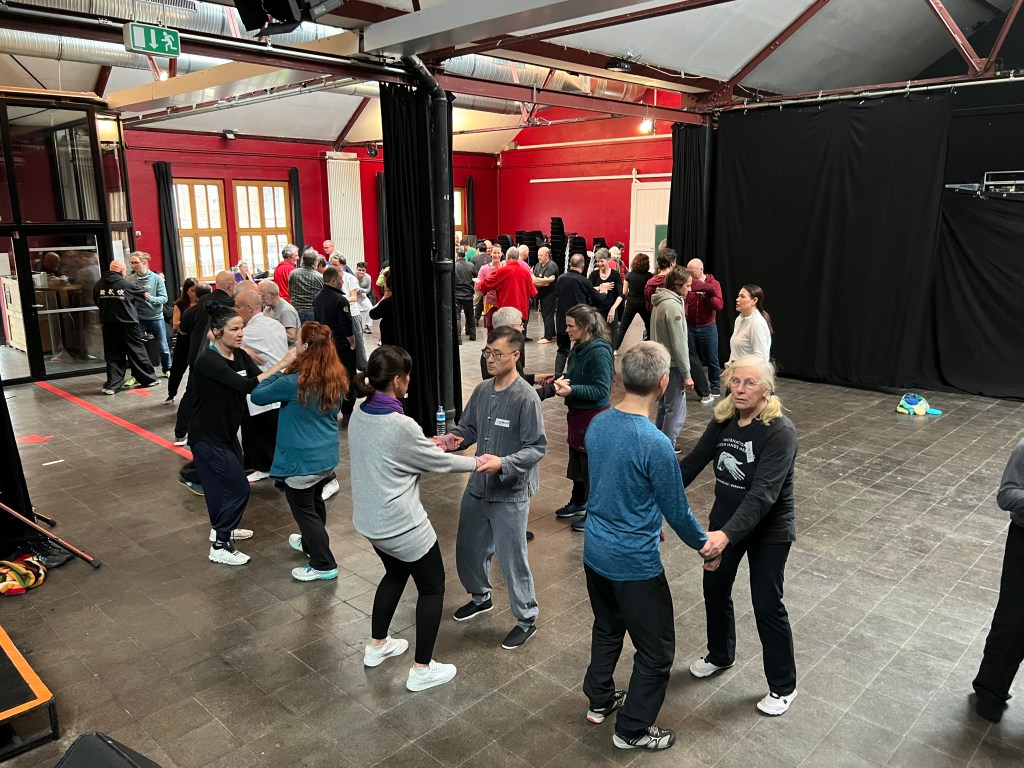
Tuishou (pushing hands) Partner work
Tuishou, often referred to as “push hands,” is a traditional Chinese martial art exercise that originates from Tai Chi (Taijiquan). It is a partner training routine that emphasizes sensitivity, balance, and the redirection of force. Philosophically, Tuishou can be seen as a metaphor for life’s interactions and conflicts. It teaches the value of adaptability, the power of softness, and the importance of maintaining one’s center amidst external pressures. Engaging in Tuishou is not just about physical skill but also about cultivating a mindset that embraces change, flow, and harmony.
In the realm of contemporary dance and performance, Tuishou offers a fascinating exploration of the body’s interaction with external forces and the continuous negotiation between yielding and asserting, which can deeply inform artistic practice and the embodiment of philosophical concepts.
 INNER EYE COACHING
Leave a comment